
04 Night / 05 Days
Ayodhya, Kashi, Prayagraj
Ayodhya
Religious Significance: Ayodhya is one of the holiest cities in Hinduism, believed to be the birthplace of Lord Rama, an avatar of Lord Vishnu. It is also known as “Ram Janmabhoomi.”
Historical Importance: Mentioned in ancient texts like the Ramayana, Ayodhya holds a deep historical and mythological significance.
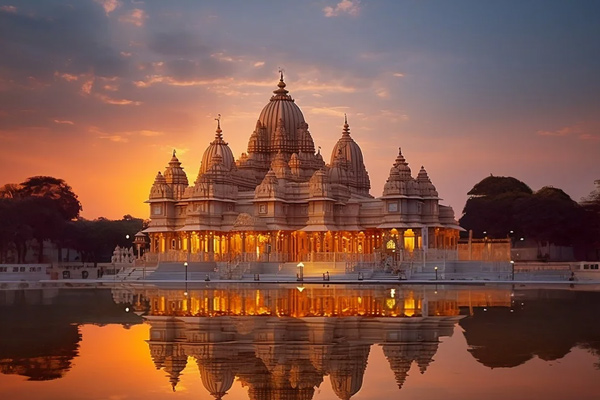
Key Attractions:Ram Janmabhoomi Temple: The recently reconstructed grand temple dedicated to Lord Rama.
Hanuman Garhi: A temple dedicated to Lord Hanuman.
Kanak Bhawan: A palace-temple associated with Lord Rama and Sita.
Saryu River Ghats: Sacred bathing ghats along the Saryu River.
Festivals: The city comes alive during festivals like Ram Navami and Diwali with grand celebrations and rituals.
Kashi (Varanasi)
Religious Significance: Known as the spiritual capital of India, Kashi is one of the oldest continuously inhabited cities in the world. It is considered the abode of Lord Shiva and is also called “Banaras” or “Varanasi.”
Cultural Heritage: It has been a hub of learning, art, and music for centuries. It is also revered by Buddhists and Jains.
Key Attractions:Kashi Vishwanath Temple: Dedicated to Lord Shiva, it is one of the 12 Jyotirlingas.
Ganga Ghats: Iconic ghats like Dashashwamedh, Assi, and Manikarnika offer spiritual experiences and vibrant rituals.
Sarnath: A nearby Buddhist pilgrimage site where Lord Buddha gave his first sermon.
Banaras Hindu University (BHU): A prominent educational institution.
Unique Traditions: Evening Ganga Aarti at Dashashwamedh Ghat is a mesmerizing ritual.
Famous for: Silk sarees, wooden toys, and classical music.
Prayagraj (Allahabad)
Religious Significance: Prayagraj is revered as the meeting point of three sacred rivers—Ganga, Yamuna, and the mythical Saraswati, making it a prime pilgrimage site.
Historical Legacy: Known as “Allahabad” during the Mughal era, it has played a significant role in India’s political and cultural history.
Key Attractions:Triveni Sangam: The confluence of Ganga, Yamuna, and Saraswati, considered a holy site for rituals and ceremonies.
Allahabad Fort: Built by Emperor Akbar, it is a historical landmark.
Anand Bhavan: The ancestral home of the Nehru family, now a museum.
Kumbh Mela: The largest religious gathering in the world, held every 12 years at the Sangam.
Cultural Highlights: The city is a hub of poetry, literature, and music, with a rich tradition of fostering scholars and artists.